Sunday, November 16, 2014

An Endless but Flavorless Buffet

The following is an excerpt of an email sent from Will to Art on 5 October 2014.

Michael Pacher 004.jpg
Saint Wolfgang and the Devil "Michael Pacher 004" by Michael Pacher - The Yorck Project: 10.000 Meisterwerke der Malerei. DVD-ROM, 2002. ISBN 3936122202. Distributed by DIRECTMEDIA Publishing GmbH.. Licensed under Public Domain via Wikimedia Commons.

I've pondered your insights and questions, and here's the best I've got: Art is a ministry.

I think this when my wife makes art, when I listen to your music, and even when I play in all my goofball bands. There's a little bit of the Will Witkowski shaper in me, but mainly my role as a drummer is to help other musicians sound their best and meet their visions for their music and to help the audience have a powerful experience that in some way draws them toward God, even if it's just through a reminder that life is good and joyful.

Praise Him with drums and dancing! Praise Him with loud cymbals!

The Arthur White project aims to give more to God and man than any of my other projects and it's hard to feel significant feelings of accomplishment because the scope is so large and we're so small. But my faith here has a German angle to it. We keep going, not out of a hope of reward or success, but because it's the right thing for a story and body of songs so powerful to exist. We keep dedicating everything that comes from the project--whether it's joy, recognition, wealth, or suffering--back to God. And if we fail, we either screwed up, weren't really doing God's will, were being taught our limits, or something else.

But to go full-out Beowulfian, we've all got to enter the cave. If Arthur White doesn't make much impact, we haven't failed. If we and other people called to make art cease to be the sort of people who enter the cave, a fallen mankind falls some more.

The Swedes of mediocrity conquer us, and Screwtape and his minions get an endless but flavorless buffet.

Friday, November 14, 2014

I'm CEO

The following is an excerpt of an email sent from Art to Will on 4 October 2014.

"If I glorify myself, my glory is nothing; it is the my father who glorifies me"
(John 8:54).

Bob Lefsetz celebrates the amoral acumen of the "professional," contrasting him with the sorry-ass amateur.

The Social Network (and the true-life story it depicts) shows how only one person wins, only one person gets to say "I'm CEO, bitch."

The latter of these two stories has all the classic raw material needed for tragedy.

What will our success story look like as Christians, and not just in the afterlife, but here? We have willingly and consciously embraced our constraints, or at least considered the fact that they might be expressions of God's will, which is "love and mercy itself." But they do put us at a distinct disadvantage at least from the worldly viewpoint, don't they?

We didn't go to Harvard. We're not the next Bill Gates. Doesn't look like we're going to be the next Mother Teresa either.

The saint finds refuge in the shadow of God's wings, in obscurity, in the hidden life. But how does that intersect with rock 'n' roll stardom?

Job was prospered after his trials, after he acknowledged the greatness of God's power, the inscrutability of God's wisdom. His intercession on the part of his friends (some friends!) is the last step in his definitive surrender. He is similar to Nietzsche's Dionysiac man in that his former freedom and prosperity are eclipsed by the blessings won by his present passivity.

The frequent mention of the Leviathan in Job suggests that our existence finds its foundation at the bottom of these dark, primordial waters. Yes, we are to build our lives on the rock, but we also need to be drowned in Baptism.

The greatest mystery is God's mastery of chaos.

Not mastery in the sense of vanquishing chaos: there is no analogous "captive led captivity" for chaos. Rather, God's mastery takes the form of transforming that element into something holy: the waters of Baptism, the waters of the womb. I just marvel at the thought that when the angels "came to present themselves before the LORD, the satan also came among them" (Job 1:6). And so God gives satan his "blessing" in a certain sense, and in so doing, transforms satan's trial of Job into a blessing.

And this is the miracle: when those whose lives have been touched by evil or chaos or tragedy are somehow blessed by that encounter. Yes, in some cases that happens through reparation after the fact, or even after death. But also it happens in life.

And so, with faith do we go down to defeat and failure, knowing that somewhere in those depths we find our foundation.

Thursday, October 30, 2014

A Von Trapp Family of Arthur's Kids (Part 2 of 2)

The following is an excerpt from a 14 September 2014 email exchange between Art and Will.

Art:
I guess my affinity for the violent Agnieszka is that I find the idea of staging an attack like that funny. The band has been rocking "Tunnels within Tunnels" for a few minutes and Arthur is finally triumphantly trotting up through the crowd toward the stage (I imagine him in an all-white jumpsuit thing with a little sequined cape). Agnieszka broadsides him and starts beating the crap out of him. She finally leaves, and Arthur, trying his best to save face, slinks up on stage to join the band.  
But I think your "cut all ties" idea is just as plausible. 
Yes, I agree maybe there's a myth of those "immaculate" conceptions. Perhaps this is a myth that Will perpetuates for some reason--maybe legal. For obvious reasons, I don't think Arthur should actually have that power, which would never be a God-given thing (twofold meaning of the conjugal act, Humanae Vitae). 
I do think The Sound of Music would be worth mining as kind of template that would be distorted in Arthur's life. Will is, in some ways, more like Georg Von Trapp than Arthur is, what with his patriotism and strict demeanor. But many of the same elements are present in both stories. In some ways, Arthur and Will are Maria and Georg, respectively, temperament wise. Like Maria, Arthur is convinced he has a calling, one that his association with Will pulls him out of. In Maria's case, that turning point was precipitated by love. It's almost the opposite in Arthur's case. But Will is also like the manager in the film who first realizes the possibility of fame and riches. 
Maybe we should keep these ideas in mind for a musical.
Will:
Three clarifications:  
  1. I also think the violence is hilarious. There's no reason why we can't have fits of public violence followed by the cutting of all ties.
  2. Yeah, of course Arthur can't really have that progenerative power. That's why I've never taken it seriously. But Will perpetuating the myth, maybe not only for legal reasons but to make the levitation seem less possible by surrounding it with a bunch of other ridiculous claims while simultaneously creating extra buzz makes sense.
  3. I was just thinking of Agnieszka as a single mother trying to force a Von Trapp thing out of the kids. Having Arthur and Will be a part of it wouldn't make much sense with their crowded schedules, but it would play up the similarities between Will and Agnieszka as profiteers and exploiters of family. I was kind of thinking of a way to deal with a distortion of Spartacus I have in my head. Arthur hears a heavenly call to bring his music back to the masses and scrape out some sort of meager tour even though nobody has heard of him. Suddenly, there is a whole flood of people claiming to be Arthur White.  

Wednesday, October 29, 2014

A Von Trapp Family of Arthur's Kids (Part 1 of 2)

The following is an excerpt from a 14 September 2014 email exchange between Art and Will.

Art: 
As for Arthur's legitimate children, I just see them wandering around together en masse following Agnieszka as she tackles and beats Arthur up at a concert. This, of course, would have to be an earlier concert, but I think it could be a humorous, regular feature at some point. But we'll have to hurry up with that one, since that would be a fairly young Arthur. They could still wander around that way as adults, without any sort of differentiation, almost an appendage of Agnieszka's, backing her up in confrontations with Arthur and Will. I'm not sure I can come up with individual personalities for all of them...maybe that's a spin off, like A Different World
But we could develop the oldest legitimate son or daughter as a foil for Augustine. Of course, Augustine would already be a natural enemy of Will's, who would never give the green light to "An Evening with A. White." I see Augustine getting the rights to perform his father's songs in some shrewd, possibly fraudulent way. 
Maybe he comes into the room after his father has been zapped and gets him to sign away the rights.
Will:
I was thinking about the rights to perform. Really, that would have to come through the cult. An illegitimate son from a Japanese cult member would have an in with the cult. So it could be that we've got a parallel between the fake Farthington and the fake Arthur. But it could also be possible that Will somehow wins back the rights for the songs written by A. White (maybe Arthur just has terrible handwriting) and Augustine claims the ownership and successfully copyrights his father's work himself. Arthur and even Will would not be in any sort of shape for a long, drawn-out legal battle, and the cult could easily fund one. 
If we have a legitmate son fighting for the rights, he could be Aquinas White or something like that. Sean and Julian. 
I also just see a mob of kids and an angry Agnieszka. I never thought about the angry mob led by Agnieszka, but I have thought of the idea that Agnieszka just cuts Arthur off from the kids completely. You have a song about that. What the details are behind that story, I don't know. One idea is that Arthur joins the cult and cuts ties and she never forgives him and the kids are too young to really bond too much with him before he leaves anyway. Another is that she doesn't want to deal with "crazy" Arthur...maybe she doesn't see him as good for the kids. 
Incidentally, I don't think this is a real saintly power, but the idea that Arthur has the power of getting women pregnant through his music has struck me once or twice before. That would also explain how he could have so many kids and no connection to them.
There could be a Von Trapp family of Arthur's children.

Thursday, October 23, 2014

#Igotmyapplewatchyesterdaysucka

The following is an excerpt from an email from Art to Will on 10 September 2014. 

White AppleWatch with ScreenI'm trying to develop Farthington's post-reversals "interface."

Yes, I had him "call" you at one point, sending an audio file through email. But I'm thinking it might be better for me to lurk in the silence right now until I figure this out. It may actually be another regular feature on the blog once I get it going.

He definitely can type, and text-to-voice is another means of communication. I guess my question is with the text-to-voice: what are the media through which these messages get expressed?

I was thinking about YouTube videos where it's just a darkened room where you can't make out anything except a little light getting past some light-blocking shades. Depending on the dimensions of this room, this could be suggestive of the underground tunnel or the inner room on Topsail Island. And then have the text-to-voice messages over the top of those videos.

As an emblem of the modern age, Carlton needs to somehow adopt an involuted, pull-marketing strategy--as opposed to an evoluted, push-marketing one.

By the way, see Lefsetz lambasting Apple's botched U2 album release. I do like Farthington chiming in on Facebook and Twitter in incomprehensible ways, showing his utter lack of tact or "netiquette."

Like last night, I was thinking I might jump in with


As with my Phil Collins and Olympics posts of a few months ago, I want people to walk away like, "WHAT???"

I want Farthington to have zero communication skills, but show obvious enthusiasm for engaging the conversation (along with a misuse of all its tropes and idioms) in his culturally autistic way. I might need to find a Top 10 list of all the types of comments never to make online and just use that as my guide.

Tuesday, October 21, 2014

Roll Over, Beefoven

The following is an excerpt of an email sent from Will to Art on 10 September 2014.

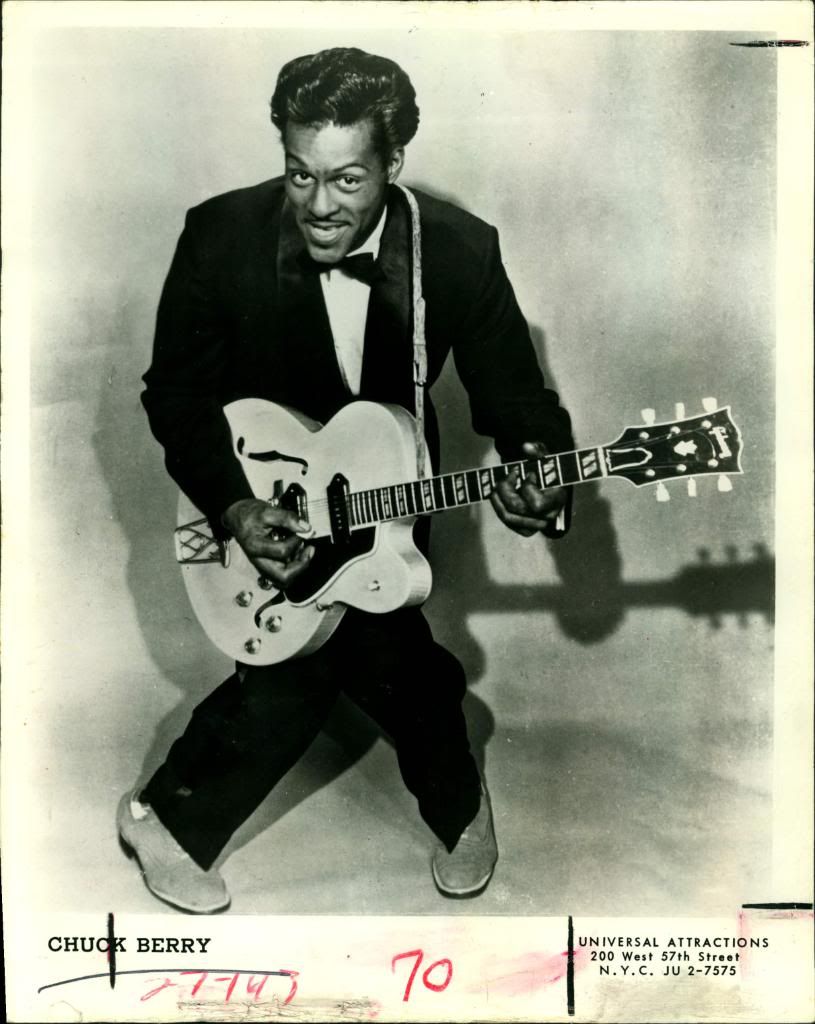
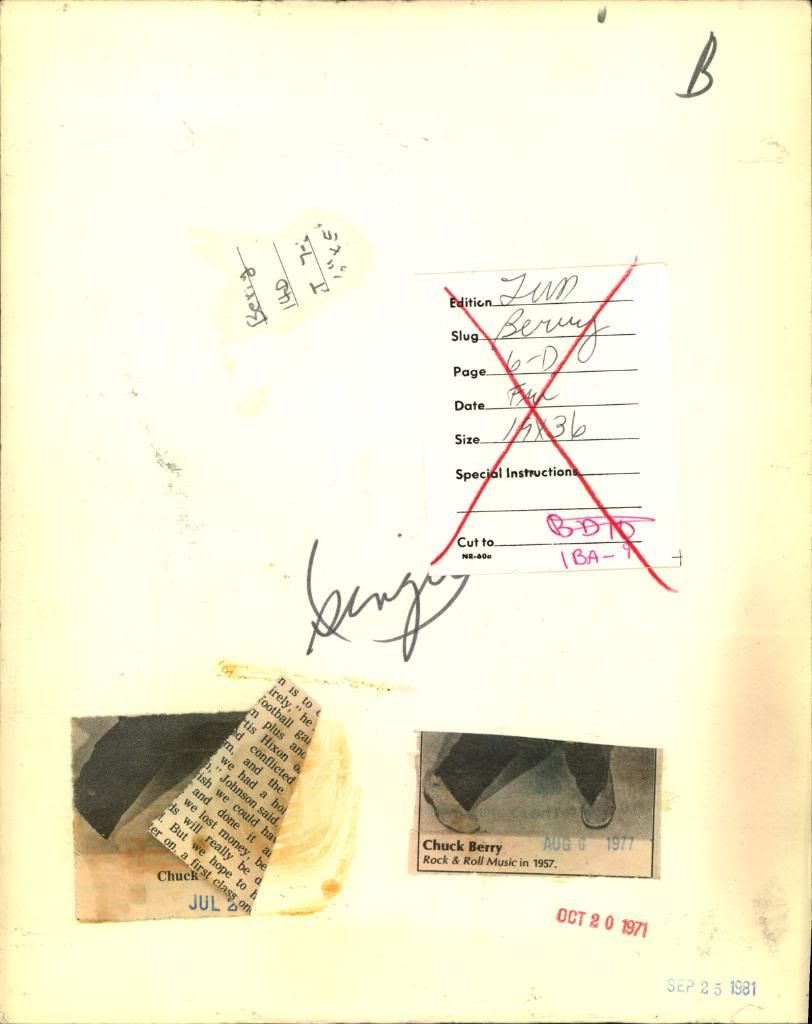
Chuck Berry 1971.JPG
"Chuck Berry 1971" by Universal Attractions (management) - eBay item photo front photo back. Licensed under Public Domain via Wikimedia Commons.
Bystanders playing roles, cover songs, digital auditions to join the group, possibly secretly authorized by Steffi Humboldt as Dr. Farthington...that could be pretty funny.

It actually might be a way to have a contemporary Concert for Iceland. Maybe it all appears to be arranged by the Arthur White camp. Maybe we could bring back the idea of Augustine White. Maybe he, some web winners, and the angry remnants of the original Sweet World use a new Concert for Iceland as revenge against Arthur.

I've also been thinking about the lost storyline of the original Sweet World trapped in Japan, Arthur's kids, and Rystyy Kryyztyylz (sic).

We have some generational juxtaposition going on with Carlton vs. Steffi (the 70's cult becomes the Internet) and the two generations of Joe Lazari.

But it would be fun since we have the Witkowskis as the problematic American nuclear family to deal with the Whites as the deconstructed postmodern family. (There might also be an opportunity to contrast musicians "back when music meant something" to the technicians of today).

Anyway, I'm into this notion that the original Sweet World lives to spite Arthur but isn't quite bright enough or resourceful enough to do so, and that Augustine is basically bent on revenge, too, which leads to Concert for Iceland II featuring A. White and the Original Sweet World. I also like the idea that two members of The Sweet World form Beefoven with Rystyy Kryyztyylz and later change their appearances to join the cult and the band Apotheosis, not out of love for Farthington but to plot revenge against Arthur. Perhaps Arthur never even knew their names in The Sweet World.

Also, I'd be really happy if Beefoven's album were called Roll Over.


Sunday, October 19, 2014

Crowdsourcing a Legend

The following is an excerpt of an email sent from Art to Will on 8 September 2014.

Leonard Cohen 2187-edited.jpg
"Leonard Cohen 2187-edited" by Rama - Own work. Via Wikimedia Commons.
One idea that might fit into this last, Third-Person-of-the-Holy-Trinity "phase" could be covers of the songs by other bands, which is very appealing to me.

Can we have such a short, diminutive second phase and just move directly to the third?

What does it say that the second phase was so brief? What would be some other manifestations of this phase? Obviously, this is a kind of metatext very different from the ones that belong to the second stage. And this all lines up nicely with a "Second Coming": The Return of Arthur White!

I guess I first got turned onto this third moment when I showed up in Metro Detroit, recorded my stuff, and left. I heard it again about a month later: people had recorded background vocals, bass, rhythm and lead guitar, and keyboards. Maybe this is nothing to write home about, but that's the feel I'm going for. In part, it's due to my family life situation that I'd love to have the Leonard Cohen gig where I'm up on that Zen mountaintop. I suppose everyone would love that. But it is somehow consonant with the basic thrust of the project.

Maybe a benefit/tribute concert for the catatonic Arthur, where we arrange to have bands play covers or even original songs dedicated to him (I'm not a Pink Floyd fan, but like "Wish You Were Here").

Maybe a call for songs--crowdsourcing a legend.

I don't know how much work it takes to get that flywheel spinning. Probably a lot of the traditional "grinding": writing music, doing shows, recording video/audio footage, etc. But one of the main points of the project is getting a myth going with a minimum of "substance"--this, of course, being one of the characteristic features of the Internet age.

Maybe I'm talking crazy.

Friday, October 17, 2014

Quasi-Trinitarian Concept

The following is an excerpt of an email sent from Art to Will on 7 September 2014.


First of all, thanks for the publicity yesterday. Looks like not many people heeded your warning, but, according to the readings today, we should just treat them like unbelievers.

I'm playing around with something in my mind and I'd like you to help me make these distinctions.

Plotinus
Plotinus
As you know, I really like the metatext. Obviously, we've never downplayed the importance of the text, which, in my estimation, is first and foremost the songs. But there seem to be some intermediate states along that spectrum. One state is metatexts that you and/or I create that are closely related to the source text, namely, recordings or performances of the songs. A second state are the metatexts that begin to move further afield from the original text: the blog, scripts, dramatic performances, a podcast, etc. We began to get into a layer out beyond those two layers in our radio interview where another party is collaborating with us to create the metatext of the interview.

These three states are where the ineffable is becoming increasingly incarnate, for lack of a better word.

Although it's not appropriate to speak of "moments" in God's identity, the text and the three metatextual states could be considered analogous to the persons of God the Father and God the Son respectively. We could perhaps additionally divide the God the Son moment into three other phases: Jesus as Word (playing, performing the songs), Jesus' mission (the blog, scripts, podcast), and Jesus' commission (interview).

I'm curious about ideas for creating yet a third moment or phase, which would be analogous to the person of the Holy Spirit.  This might be where an outsider responds to the original text, encouraged by but independent of the metatextual manifestations of the second phase.

This is setting up something more like Plotinus' quasi-trinitarian concept: the One, Intellectual Principle, and Soul.

Wednesday, October 15, 2014

Visually Spectacular Sequences

The following is an excerpt a 4 September 2014 email exchange between Art and Will. 

eyjafjallajokull-volcano-lightning-iceland_26742_990x742

Art:
So we're starting to get the conceptual foundations laid, but what does any of this look like in terms of a narrative or dramatic performance? I know we may not do another dramatic performance anytime soon, but I still think that's a good place to start in terms of envisioning it. Not relying on much spectacle may still be a good discipline to impose (we can always have one or more characters tell some of the more visually spectacular sequences). 
I thought about this a little more. The number one thing is getting people a chance to hear the music. That rules out the novel as a mode.
Will:
If the quest is to tell the entire story, I think the least expensive and resource-intensive way to go is a podcast, and if we somehow were to get access to gobs of money and resources, a TV series or series of movies would be great. I keep thinking visually, which makes the podcast less appealing, but the fact that it's doable is more appealing.   
If we want to aim for another concert, perhaps late next summer to promote a record we make early next summer, that's certainly doable. I don't know what era I'd aim for. If we were to stick with the idea of a greatest hits record, than maybe the idea would be to do some sort of comeback tour...the same basic show in a few different places, and maybe it's a real lean production...possibly just you, or just you and I, or maybe we get Father in the mix. And maybe we look at Arthur about six months to a year after "An Evening with Arthur White" ended. We could shoot the video of Arthur getting wheeled in to an open mic night and use that as a little push marketing to draw people into both the record and the mini tour--not the full-fledged comeback, but sort of a precursor. 
Maybe after "An Evening with Arthur White Ends," Arthur musters the resolve to bring his music back to the world, and maybe Will offers his help, but in a much more humble way. Really, it has to be humble: Will has no connections and no money to put behind the tour--he just knows how to use a phone, book a show, and drive a car. Maybe he enlists Fr. Bernard for a little strength. And maybe they make the greatest hits album and its really good because Arthur can multi track and they can get a few extra musicians, but it's still not the blow-out comeback that the Joe Lazarus, Jr. storyline would enable. I suppose that when Joe gets the envelope, it may take a long time to get to him. It went to his mom's house and maybe she doesn't want Joe to know about it.   
Anyway, I think there is potential for some buzz if the little shows are impressive enough that people want the CD's, but then the CD's are far better than people would have expected. Maybe it does make sense to have Will have a stash of old records that he sells off. Of course, those are going to cost us way too much money and time. It would be really cool, though, to play a bunch of old guys selling stuff we did in the 70's to people who have no idea what is going on.

Tuesday, October 14, 2014

Cultural Autism

The following is an excerpt a 4 September 2014 email exchange between Art and Will. 

Giroust Oedipus at Colonus
Oedipus at Colonus by Jean-Antoine-Théodore Giroust
Art:
A lot of stuff coming together in those last few emails. Some paired motifs like pillars and the Tower of Babel. 
I like the head on a stake image. If I can go pagan a little here, the head on the pike also conjures up Pentheus. When you look at the more proximate cause of why Detroit went down, it was people trying impose order--literally in the form of concrete--over the chaotic, creative substratum embodied most fully by Black Bottom. 
Can we put Stan at the center of the collective punishment Detroit and its suburbs suffer? 
Do Arthur and Will have a chance to make it right? Does Arthur, cursed by many things, now have the power to convey divine benefits such that--in an Oedipus at Colonus-like reversal--everyone loves him and wants to claim him? 
Seems like Detroit can also be seen as a particularly Yeatsian apocalypse with its ever "widening gyre" and "the center cannot hold." And what's the eschatological ending there? Well, either heat death, big rip, or big crunch. 
I like all the anti- stuff as well. Seems to suggest that worldly collapse is necessary before spiritual rebirth and growth can occur. That seems to work with Detroit as well. 
I've got to go! You're doing this conversation much more justice!
Will:
We don't need a literal pillar, although I wouldn't rule one out. 
I'm also wondering if we can treat the "ruins" in a way that runs counter to the popular images of ruins. There's plenty of bland, boring stuff in the fallen areas of Detroit. And even though the symbol of vegetation is cliché, it doesn't seem to be that common of a visual trope in ruin porn. It would be strange to see Witkowski and Sons Cement evoking the Shire. 
Along a related thread, I've been thinking about a recent development in postmodern analysis: cultural autism.  Don DeLillo's Point Omega deals with this issue in several ways; it also deals with the issue of the American wasteland--postmodernism becoming a desert and people devolving into stones. People may read Arthur as autistic rather than as a mystic, but there is a bit of cultural autism at work in many of our characters: a type of preoccupation with personal agendas that are out of joint with a healthy social fabric. The notion of cultural autism is that the godly amounts of power technology provides is turning us all into little gods in uninhabited universes. We are desolate because we sculpt worlds for ourselves that aren't inhabited by others. The characters in Point Omega can be near each other and try to simulate vague ancestral memories of familial and romantic relationships, but there is no heart in any of it; things like divorce roll in like the the tide, barely worthy of notice. 
Another thing worthy of notice is another DeLilloish thing: postmodern time. He has been really preoccupied with the shift in our perceptions of time at least since Cosmopolis. Basically, satellite and digital culture have uprooted us from any traditional human sense of time in ways that dwarf the impact of the clock on human existence.
I love looking at the literal construction of Detroit in symbolic ways. My feeling is that Detroit is basically Rome and that its problem is not that other cities learned how to be flexible and Detroit biffed it; it's that Detroit collapsed first, and the seeds of its collapse are germinating in all cities. To also go pagan, maybe the country offers up Detroit to an angry destroyer god to spare New York, Chicago, and LA.

Saturday, October 11, 2014

Tower of Babble

The following is an excerpt from an email from Will to Art on 3 September 2014. 

Pieter Bruegel the Elder - The Tower of Babel (Rotterdam) - Google Art Project.jpg
The Tower of Babel by Pieter Brueghel the Elder

I guess there's an ironic dual effect of Arthur as a pillar saint.

On the one hand, he becomes a spiritual totem of sorts; a healing presence; a living amalgation of every literary and visual form we've been able to imagine baptized to Catholic ends and still more; someone beyond our understanding and therefore pushed to the outskirts of a world that has written his kind out of its grand narratives; a healing figure, a cautionary figure, a prophet, a man truly of his time and seeming out of joint with his time. And at the same time, he is Art on a pedestal. In the end, he's our Art.

What Art sits amid, I suppose, is the family legacy: cement, the neglected church of his youth, dead industry, the defeat of the dream of progress, modernism, the self-made man, etc. But the pillar is a throne; all these things were the Tower of Babel and Arthur's existence hastened their fall. We end up with the Gestalt effect: one view makes Arthur the figure of God's triumph sitting victorious on the battlefield; another makes him a colossal failure.

The determining factor is our gaze: are we viewing as Americans or as the saints militant?

A cue toward interpretation is Will, who is a penitent of some sort. Will has abandoned the rubble for something better, and that something better appears lower depending on our gaze. We get that squirminess Chesterton achieves in The Man Who Was Thursday, in which what seems like anarchy, chaos, and collapse serves a higher order even the faithful can't comprehend and only poets can hope to glimpse.

Somehow, the farcical ends of Steffi and Farthington fit well with the seriousness of this pillar image. The apocalypse they experience is a "Tower of Babble" collapse of postmodern popular culture, not the Final Judgment. They are two glimpses of postmodernism; Will and Arthur are foils. Arthur is a prophet and Farthington is a Pharisee. And it makes sense that Will and Steffi have an awkward union: Steffi is the nightmarish face of Will's dream. He mythologized his own father too much to see the truth about his father's misguided approach to life. Plus his dad is a loveable and admirable guy in many ways even if he ends up a citizen of hell. He's a tragic figure, where Steffi is more of a witch in a world that has deconstructed the witch concept into an empowered feminist.

I would not mind an allusion or two to Ariana Huffington!

Friday, October 10, 2014

Trots Around Birmingham in Yoga Pants

The following is an excerpt from a 3 September 2014 email exchange between Art and Will. 

Michigan Central Station [3]
Michigan Central Station, Detroit
Art:
Yes, the difficulty with the Rush thing is that it's so hackneyed at this point. So, having me standing among the ruins of Detroit might make sense just from the practical standpoint of that it's cheap and surprisingly quiet. But really that whole situation is more like The Picture of Dorian Gray. If Detroit is the ugly portrait, it's only a reflection of the true moral desolation that trots around Birmingham in yoga pants (or slouches toward Bethlehem?).

Will:
I think the non-hackneyed angle is that Detroit is supposed to fall. 
The narratives about Detroit are always tragic and hopeful: look at the hubris that led to this, but with a little pluck a new generation of people will fix it, because the people of Detroit and the people who love Detroit have heart. It's just been a victim of bad management and greed! I don't think I've heard anyone say that it's a head on a pike on a spiritual battlefield and a holy reminder that God's truth triumphs over the lies of the American dream. The thought is too disturbing. 
And yes...the Birmingham connection is interesting. Speaking as a Birmingham kid, I can say that Birmingham people either cut Detroit out of their existences, embrace Detroit albeit in a fairly touristy way to augment Bohemian cred or assuage liberal guilt, or are actually from Detroit, remember it fondly and try to preserve it in the past and act like authorities on it to other people, but avoid its present because they feel implicated in its collapse. Oh, I guess there are also the GM execs who reduce Detroit to their offices and a few restaurants...they stay in Birmingham even when they are in Detroit.

Wednesday, October 8, 2014

Some Unfocused Connection

The following is an excerpt from a 3 September 2014 email exchange between Art and Will. 

Gill Scott Heron 2009 Regency.jpg
"Gill Scott Heron 2009 Regency" by Adam Turner - Own work. Licensed under CC BY-SA 3.0 via Wikimedia Commons.

Art:
I wanted to keep the dialogue/dialectic going as best we can, although I know you're likely to be busy this year. Respond when and if you can! I myself probably won't be able to continue recording until next weekend. Hopefully, I'll be able to send something along at that point. 
Aside from the Garageband work, what chapter would need to happen next for you for the story to be coherent and/or edifying? If we had the time and resources, what era do you feel needs to be visited and why? What part of the story would be explored? What messages need to be conveyed before, as Kierkegaard puts it, "the event most opposite to his intentions should come to pass, and instead of setting the others in motion, the others acquire power over him, so that he ends by being bogged in the aesthetic."
Will:
I don't know if this answers the question, but I'm reading How to Read Literature Like a Professor, and even though nothing in the book is new info to me, it does strike me that maybe we need to mine, as we did in the early days, the mythologies of Detroit music history a bit more. I use the term mythology broadly since we're really talking about history, but rock and roll always has that Byronic element of self-mythologizing. You wrote a particularly poignant message about Joe Catholic vs. Marvin Gaye or Gil Scott-Heron; maybe it makes sense to think of how we can comment on these geniuses who don't get their due through our story of Arthur. Maybe the same is true for mystics like Blake. There's a tendency to romanticize the story of talent that burns too brightly, but not much of an effort to examine it beyond the typical ways. It's so easy to shut down thought with clichés: he was too beautiful for this world, he lives on through his art--that sort of thing. And meanwhile, people turn to the greatest hits and don't even try to know the artist. There's some unfocused connection I'm drawing between these people who were wired to truth, beauty, and goodness in modes we can't comprehend (and that may even find expression in sinful ways) and the dawn of a new age of pillar saints.   
I'm always struck by the connection between so many saints and prophets and performance art. I think of McLuhan's notions of the artist as being the only person who lives in his age and saints being the greatest artists as they always live in the eternal now and therefore are the most present in the demands of their age. I also think of his interpretations of gestalt theory and art as an anti-environment and the educational possibilities of anti-environments. Our project tries to draw people into anti-environments. And the pillar saint is all about the anti-environment. There we find ministry through anti-ministry: followers flock to their isolation, their alternative approaches, their inversion of normal secular priorities...even their inversion of traditional notions of the moral sphere of existence.
Thinking of all this, I'd say the part of Arthur (and Will) we have least developed is their end. We hint at what might happen to them, but we live in that postmodern age in which we can't view endings without skepticism and irony. You wrote a glorious ending for Farthington that resolves ironically to the St. Elsewhere finale kind of thing, but even if we followed that ending verbatim, Arthur still lives on afterward. Maybe the event ends a chapter but not the whole story. Or is that the Frankenstein-sort of ending in which the doomed outsider outlives his tormentors by a narrow margin (at least in his mind)? Or... 
I'm struck by a story my sister told me. A student asked one of her profs if he was still capable of being shocked by an exhibit. He said yes--he would be shocked if he found something truly beautiful. 
Is it possible to develop a truly beautiful ending? 
What would it look like for an elderly Arthur to find a pillar in contemporary Detroit?   
Even if it's a literal pillar in my mind for now, it's a striking image for the beginning and end of the story...something akin to the album cover of Rush's A Farewell to Kings
But I don't want something as simple as Arthur amid ruin porn. 
I doubt a pillar saint in Detroit would be noticed.

Monday, October 6, 2014

Farthington's Voicemail: That. Perfect. 1.

A treasure trove of Carlton Farthington's voicemails has recently been made available to the blog.  At the request of researchers, enthusiasts, law enforcement agencies, and other followers of the project, voice-to-text transcriptions have been published as-is rather than edited for sense.  We hope that this will better capture the texture of the spoken word, rendering it more accessible and/or flexible for the diverse purposes of our audience.


9/16/14 5:23 AM 2 weeks ago
So I'm gonna close up pretty soon, but You know, I think one of the things that I a rediscover had a chance to discover through paid you guys is Yes. I was got to go for him. 1 To creation. You know how does he. Do that you have all all all those things. But You know the same way. As. I've got care, hey, i'm going to sadly. Zeke, extremely weak. And Order that happening because I don't know, powerful and then also. He's extremely weak and then 9. All powerful anymore in the same way that That's one of those areas able to use you know the 9th. Specialist in this area. I don't think I can do that to him. So I've got the never will. Well, that in And I thought that up pretty much Nothing happened What went out Scott. What is what is the nature of that one if they've got hat. That. Perfect. 1. For vicinity. I don't know if that you're going to suggest that You know there's a ball close to the of things that are within him that our offer, but it that one. Yes, that he experiences. The integrity, and integrity. Anything with E at the entire sounds like it, incorporating a lot of different things, but just that one, that he experiences. What makes. Hey, move toward investing himself in there Multiple as to the up and creation and holiday season. I was that even possible without diminishing Who via in his experience of being. That's great. One has been in there seems to be a number people of kind of explain this in work this out. The one that I most. Wherever's plot. How does that even happen and I. I really liked his idea where he When you sat working that out. Peace. It really makes it quite clear. That is like impossible that that would happen. But that it has nonetheless happen. And I just love looking at that for the prospective about taking who has no agenda, who has no I mean he is the Platt nest E he doesn't try to explain some of the What kind of dreams. But. He doesn't really have any agenda he's just like.

Sunday, October 5, 2014

Farthington's Voicemail: We should. Not be terrified.

A treasure trove of Carlton Farthington's voicemails has recently been made available to the blog.  At the request of researchers, enthusiasts, law enforcement agencies, and other followers of the project, voice-to-text transcriptions have been published as-is rather than edited for sense.  We hope that this will better capture the texture of the spoken word, rendering it more accessible and/or flexible for the diverse purposes of our audience.


9/16/14 5:18 AM 2 weeks ago
Hello You know I. I'm pretty much done. That's all I have to say You know I'm making a case as to why. We should. Not be terrified. I can go over some of those back to you know all of it, the letting go. It is Is there different, here at the OR. I'll talk to see. I do think he he's up in your heart. Obviously we we going to benefit of this. Yeah me. So serious and everything like that all that stuff, this is the status and Scott. You know, for our forefathers. And for all those days and it is down in think that for 4. Religion in think that's where You know, being safe from so many difficulties, that You know so many so many other previous generations of had to deal with. The Paul be. Borowitz and then after the establishment of religion. Yeah but. Again, get summarize. In order to have that experience creation. You know God wants us to get back, maybe just something resembling something of avoid something like a boy. Something, before but pretty date any of those things of that the steps, and and I've Piper, 1, equipment. I spoke with I have, really enjoyed hole. In You know if you The reason that I have done in the in the Cherie, Rishi visiting. Another call if you have an amazing bye. And I, and he even quote unquote again artist, or, or what so ever musicians, song writers. I've been amazed by what they're capable and I'm not willing to say that they're doing the somewhere 05, the creative Spirit of God, I need that. Actually, is The more speechless, perspective so. I like to think that there's something.

Saturday, October 4, 2014

Farthington's Voicemail: skype almost came up with the Trinity

A treasure trove of Carlton Farthington's voicemails has recently been made available to the blog.  At the request of researchers, enthusiasts, law enforcement agencies, and other followers of the project, voice-to-text transcriptions have been published as-is rather than edited for sense.  We hope that this will better capture the texture of the spoken word, rendering it more accessible and/or flexible for the diverse purposes of our audience.


9/16/14 5:14 AM 9 days ago
So I had. I think that that's You know that's one of those things that God wants us to get a got one God wants to give us an experience that I'm I'm just An instance of the same thing. So I realize, but I liked the idea, that we have a chance. To Be A taken And And no, we're not a taken, but we get a chance to be. A Pagan and we get a chance to see, this through pagan nice, we get a chance to discover some of these realities, through pagan I have some. The put you on speaker phone. Excuse me Hi Tony, I. I just always thought it was really cool. How, for example. If you can. Bye now And in seeing, the skype almost came up with the Trinity, with his idea of the one intellectual principal and so i mean that. That's amazing. And just I think. That You Know. Christianity was round at that point when he was Friday, but really doesn't seem like he's very heavily influenced by other even thinking about it. Looking to it, scriptural and Dr know revelation or traditions No, I can't get any of that. He's just kind of realizing that God must have used to read moments and he doesn't quite a hit it right on the nose. Of course You know it's not really from C. Scott phone in his identity, but, and, bye. I thought that poor thing. Okay, that you could happen if I don't know. Same day and I'm not saying that You know, or busy experience in would suggest You know, result in something. Re-dialed it. I don't think that it is. I think that it's it's a very exiting type of thing. You know, there is anything we have already been established art and This is the mandated that is just not really, their province. But I do think that there's an opportunity to discover some things in rediscover some things through those taking nice. And you know in the same way. Where I see, those things happening and different religions in different, philosophies. The that straightens my face.

Tuesday, September 30, 2014

Farthington's Voicemail: mistake theology

A treasure trove of Carlton Farthington's voicemails has recently been made available to the blog.  At the request of researchers, enthusiasts, law enforcement agencies, and other followers of the project, voice-to-text transcriptions have been published as-is rather than edited for sense.  We hope that this will better capture the texture of the spoken word, rendering it more accessible and/or flexible for the diverse purposes of our audience.


9/16/14 5:09 AM 9 days ago
Hello to experience that for the first time to the I. I just think of Abraham, Lou You know maybe dat i don't. I don't think you did, but maybe it doesn't. I don't know kinda passed on to him. So all through it. And such. But way The error and being approached, by 7. Got and not having any idea about This person is believe that God and and then actually getting enough. These are pretty crazy things I. I think the maybe it is a universal thing, that You know, guidance, obviously doesn't Like I said before that and if you can use insurance and the things that have already been experience, but if we're just sort of resting on those Laurel then. Are you gonna have a chance. 23. Are we going to have a chance. 2. You caught up in that room answer cell and I don't think that we are. I think that we recapitulated. We we didn't work out that the and all that stuff and and you know we come in with our own little foregone conclusion. All of which are true. But. Not What gas getting. I think it in time. If not, that's not the laugh at that point. We were talking about. The topic of creation and we're talking about the topic, mistake theology, yeah you know all of the doctor and everything, so it's still there But that's not what this It's about that's not what we're doing right now, we're doing something else we're doing something else. You know, I mean if you want to think of it from my cellphone. If what we're doing something else in television history right now. I'm gonna stay in through something that experience here. Whether it be the experience of Creation or easy experience of being called out of You know if you have an I've given time and laser beam. Steve, Just, or whatever. I'm gonna give me a nice things of that and I didn't know if not a foregone conclusion. And I'm going to so i can use the old. If the where I'm going to discover the things to you If you do personal, error. I think that for.

Monday, September 29, 2014

Farthington's Voicemail: Received full Revelations of

A treasure trove of Carlton Farthington's voicemails has recently been made available to the blog.  At the request of researchers, enthusiasts, law enforcement agencies, and other followers of the project, voice-to-text transcriptions have been published as-is rather than edited for sense.  We hope that this will better capture the texture of the spoken word, rendering it more accessible and/or flexible for the diverse purposes of our audience.


9/16/14 5:05 AM 9 days ago
Test test. And I'm trying to get that maybe. Why some of those hit hardest actually made ME HI added advantage on this. You know, wanna come. 2. The A creative. Because the You know they have no problem going back to that moment fire two religions, and those do that you know air out before we head You know, Received full Revelations of. Of. It's been given to us, through. True Religion, He This is in stock. You know I'm just trying to call 4, why that isn't quite honestly. You know why I was much better, listen to some of those artist and I will. Two, Christian artist at least. The when he comes to music and in poetry in Literature could that be one reason and it is there a way. Is there a way 8 4 I mean. It seems like seems like they should be. I don't think that it's. It doesn't seem. Really strange, that having religion. That being Christian we've put you at a disadvantage. When you come. 2388 and and I'm wondering if there's a way checking all that stuff that the door. Net things of that true. Like I said before that thing with any of the dot. And that list. But oh well. God For the call. One into this experience of creation. Creating from sorry from the up and you know that there's been put together, K I. This is what it is. Bye bye. But they have that experience in creating from that And I don't, work on conclusions to have a note to chat with us come down from the mountain To have no old the New Testament sitting on your book shelf. And since see what What this universe is about. He wasn't got it is about You know I don't know if the more Stuart most of the like. 4 You know some of the people and Dennis is we're in we covered got for the first time. You know, I know if I have.

Thursday, September 25, 2014

Farthington's Voicemail: Experience, Joey

A treasure trove of Carlton Farthington's voicemails has recently been made available to the blog.  At the request of researchers, enthusiasts, law enforcement agencies, and other followers of the project, voice-to-text transcriptions have been published as-is rather than edited for sense.  We hope that this will better capture the texture of the spoken word, rendering it more accessible and/or flexible for the diverse purposes of our audience.


9/16/14 5:00 AM 32 hours ago
Hi. This is here experience better and because God knows the they need to. And make sure that we would. Experience, Joey. And you know in doing an experience that experiencing that that to create. Now from nothing but from Chaos. And I have a new revelation that we have, which is all. Here it is back on the way nothing about years of experience. Nicky, any of that. That's happened with the new so I'm gonna be able to put in the new covenant That's all. So here But HI, This is not time travel back before all of that. Since we are headed into the lightness of God and since we do house that aspect be Little creators. I have an experience of going back. Because He knows that we'll have a chance to rejoice in our creation, and I. I feel like a lot of people out of our 7 have felt that way felt like You know I may. I may even though quite a few things that I really hold of each true. , it otherwise. But I can't really bring those to the table artistically and, I think that's kind of what I'm trying to get it here. Is. You know, Christian artist, as to You know some other calls. Why did you leave all that stuff at the door, so to speak. And and head back into this. This is. If you're a winner. No, that has been established, none of those true, and I don't think they part rooms but none of those true. 78. It has been established. And I was wondering if that gives two counts. For the fact that we can kind of a lot of insight artist. People who obviously don't have any of those true. And it is You know I was just kind of a band in those are never have chosen the first place, really doing so amazing things amazing thing.

Saturday, September 20, 2014

Farthington's Voicemail: The Conventional Allen

Soon Yi Previn and Woody Allen at the Tribeca Film Festival.jpg
"Soon Yi Previn and Woody Allen at the Tribeca Film Festival" by David Shankbone - David Shankbone. Licensed under CC BY 3.0 via Wikimedia Commons.

A treasure trove of Carlton Farthington's voicemails has recently been made available to the blog.  At the request of researchers, enthusiasts, law enforcement agencies, and other followers of the project, voice-to-text transcriptions have been published as-is rather than edited for sense.  We hope that this will better capture the texture of the spoken word, rendering it more accessible and/or flexible for the diverse purposes of our audience.


9/16/14 4:56 AM 32 hours ago
Yeah, I don't know if it's significant that 3000 but creation is is something that has shared with all. People it. It's not part of the covenant. 35 and then creation in this experience would be something that shirts that all people, it would be easy. Testament or A A Revelation. That would be available all people. You know, because we're all This is from van for them and then. And so, in some ways. We Partake of some kind of. I think maybe pre with pre religious experience alright and in again You know some of the things that I'm sitting. I feel like I'm tripping on. Very nice. Dr only. But. And I'm just gonna saving that they want to correct with it, but would be great. Because, I. I just think that is kind of an interesting phenomenon is why wiring harness tap into this and You know, maybe not going through the conventional Allen is because you know, we do have people going to the conventional Avenue Evanston. Sometimes I wonder about the the quality of luck to you produce in there going through the conventional attitudes HI. I think this is. That. When We Partake in creation, got lots of go back and I don't, for, or you know You know, I know I don't wanna I don't wanna jump to conclusions about this, but because of the Thank God wants us to go back to you. So, pretty religious. Experience, okay free all the things that were revealed in the Bible and then You know, and and back to that periods of creation, which was pretty the file. And we're God within the last review and so anyway. And try and throw it back into that have experience of that former slaves, it'll never be at your for mostly 0. That would be nothing again, but I have that experience because.